
7 UI/UX design trends in 2025
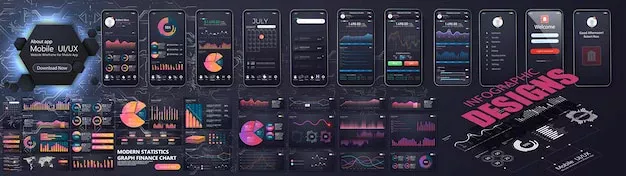
The world of website design is constantly evolving, opening up new horizons for user interaction with digital products. the year 2025 promises to be a revolutionary period in UI/UX, where technology and aesthetics merge into a unique symbiosis. Companies that want to stay at the forefront of the digital world are actively adapting their strategies to new trends, realizing that high-quality website design is not just an aesthetic component but a powerful tool for achieving business goals. In this article, we will explore seven key trends that will shape the UI/UX design landscape in 2025 and consider how they will affect the development of website design and digital products.
🔮 Neuromorphism and volumetric design: a return to realism
Neuromorphic design is a fascinating expedition into the world of three-dimensional shapes and realistic textures that creates a sense of interaction with physical objects in digital space. In 2025, this trend will reach new heights, combining tactile sensations with digital experience 🖐️.
Evolution of neuromorphism in the modern web space
Neuromorphism has evolved from a simple skeuomorphism to a complex design system that mimics real objects with light, shadow, and depth. Modern web design services increasingly incorporate elements of neuromorphism, creating interfaces that users intuitively understand due to their similarity to real objects.
According to a study by the Institute of Interaction Design, websites with neuromorphism elements demonstrate 27% higher user engagement compared to flat designs. This is because the human brain is naturally drawn to familiar shapes and textures.
- Three-dimensionalbuttons and controls create a sense of real interaction
- Realistic textures and materials – imitate wood, metal, glass
- Dynamic shadows – respond to user actions
Practical application of volumetric design
Volumetric design is especially effective in projects where the emotional component of the user experience is important. E-commerce, educational platforms, and entertainment sites are actively implementing these elements to create unforgettable experiences.
| Application area | Advantages of neuromorphism | Examples of implementation |
|---|---|---|
| E-commerce | Increase conversion rate by 18-22% | Volumetric “Buy Now” buttons, 3D product previews |
| Financial applications | Increase user confidence | Realistic widgets for transactions |
| Educational platforms | Improved memorization by 30% | Interactive 3D models for learning |
It is important to note that the price of website design with neuromorphism elements may be higher due to the complexity of implementation, but the investment pays off due to the increased efficiency of user interaction 💰.
🧠 Artificial intelligence and personalized UX
Artificial intelligence is transforming the approach to creating user experience, turning static interfaces into dynamic ecosystems that adapt to the needs of each visitor. In 2025, we will see a real breakthrough in this area.
AI-driven interfaces: a new era of interaction
Modern artificial intelligence algorithms are able to analyze user behavior in real time and instantly adapt the interface to their needs and preferences. This is a revolutionary approach that changes the very understanding of website design.
- Predictive UX – the interface anticipates the following user actions
- Dynamic navigation – the site structure changes according to the visitor’s goals
- Adaptive content – information is presented in the most convenient format for a particular user
According to a Nielsen Norman Group study, personalized interfaces increase conversion rates by 35% and reduce bounce rates by 28%. This explains why SEO promotion of websites with AI elements demonstrates higher efficiency 📈.
Micro-interactions and emotional design
Micro-interactions are small animated elements that create an emotional connection with the user. Combined with AI, they become a powerful tool for creating a positive experience.
- Reactions to user actions – subtle animations that confirm the successful completion of a task
- Emotional feedback – the interface “rejoices” with the user
- Personalized greetings and tips – create a sense of individual approach
An interesting fact: companies that have implemented emotional design in their digital products have seen a 40% increase in customer loyalty. This explains why developing a website design with emotional design elements is becoming a priority for progressive brands.
🌈 Neomorphic color schemes and dynamic typography
Colors and fonts have always been fundamental elements of design, but in 2025 they will be transformed into powerful communication and branding tools. Neomorphic color schemes and dynamic typography create a unique visual experience that is memorable and sets your brand apart from the competition 🎨.
Gradients 2.0: multidimensional color transitions
Simple linear gradients are being replaced by complex multidimensional color transitions that create the effect of depth and movement. This technique allows you to achieve impressive visual effects even with minimalist designs.
- Volumetricgradients – create the illusion of three dimensions on a flat screen
- Chromatic transitions – smooth color changes according to user actions
- Gradient textures – combine color transitions with tactile elements
Studies show that properly selected color schemes can increase brand awareness by 80%. That’s why web design services from professional studios like WonderWeb include detailed color analysis and the development of unique color palettes for each project.
Kinetic typography: fonts in motion
Kinetic typography turns static text into a dynamic element that interacts with the user. It’s not just an aesthetic technique, but a functional tool for improving the user experience.
| Type of kinetic typography | Functionality | Impact on the user |
|---|---|---|
| Responsive fonts | Adapt to screen size and user actions | Increase readability by 25% |
| Animated headlines | Draw attention to key information | Increase content memorization by 30% |
| Interactive text | Responds to hover or touch | Increase engagement by 40% |
When choosing a contractor for website development, it is important to pay attention to their experience with kinetic typography. Improper use of this technique can negatively affect page loading speed and user experience 🚀.
🔄 AR/VR integration and seamless omnichannel experience
Augmented (AR) and virtual (VR) reality are moving from the category of experimental technologies to standard tools for creating immersive user experiences. In 2025, we will see these technologies deeply integrated into everyday web interfaces.
Web AR: augmented reality without apps
Web AR allows users to interact with augmented reality elements directly through a browser, without the need to install additional applications. This opens up new opportunities for e-commerce, education, and entertainment.
- Virtual fitting rooms – allowing users to try on clothes, accessories, or cosmetics
- Interactive 3D product models – the ability to view the product from all sides
- AR navigation – intuitive navigation on complex websites
According to Gartner, companies that have implemented AR elements on their websites have seen a 25% reduction in the rate of product returns and a 40% increase in conversion. This explains why website design with AR integration can be more expensive, but provides a much better ROI.
Omnichannel UX: seamless transition between devices
Modern users interact with brands through a variety of devices and communication channels. An omnichannel approach provides a holistic experience regardless of the point of contact.
- Progress synchronization – the ability to pick up where you left off on another device
- Adaptive content – optimization of information for the format of each device
- Cross-platform authentication – secure and convenient login on all devices
Interesting fact: according to Harvard Business Review, customers who interact with a brand through multiple channels spend 30% more on average than those who use only one channel. This underscores the importance of investing in omnichannel UX and explains why Google ADS contextual advertising is often targeted at different devices and platforms 📱.
To effectively integrate AR/VR and create an omnichannel experience, an integrated approach is required, which includes SMM promotion, targeted META ADS advertising, and other digital marketing tools.
In 2025, successful design is not just an aesthetic design but a strategic tool for achieving business goals. The UI/UX design trends we have reviewed reflect profound changes in the way users interact with digital products. Neuromorphism and three-dimensional design create a sense of reality in virtual space. Artificial intelligence personalizes each interaction, adapting the interface to the needs of a particular user. Neomorphic color schemes and dynamic typography turn visual elements into powerful communication tools. AR/VR integration and omnichannel approach blur the boundaries between different devices and realities.
For companies that want to stay competitive, it is important not only to follow these trends, but also to strategically implement them in their digital products. The WonderWeb team specializes in creating innovative design solutions that not only meet current trends, but also help you achieve specific business goals. Contact us today to find out how cutting-edge UI/UX design trends can transform your digital product and take user experience to the next level 🚀.

