
10 tips for creating an effective content plan
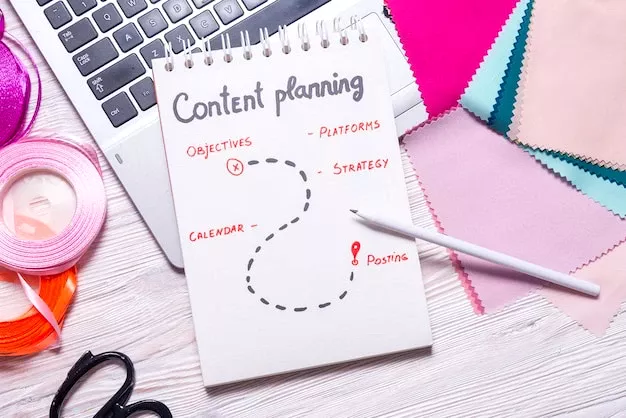
Creating an effective content plan is the foundation of a successful marketing strategy in today’s digital world. Without a clear plan, your efforts can be chaotic and fail to deliver the desired results. A high-quality content plan helps you structure your work, optimize resources, and ensure consistency in communication with your audience. This is especially important when developing a website, when you need to plan content for different sections and pages. Let’s take a look at ten key tips that will help you create a content plan that works, which will help you achieve your business goals and increase the effectiveness of your online presence.
🎯 Strategic content planning: the foundation for success
Strategic planning is the first step to creating an effective content plan. It determines the direction of all your efforts and ensures that content is aligned with business goals. According to the Content Marketing Institute, 65% of the most successful companies have a documented content plan, while only 14% of less successful companies do. This confirms the importance of a structured approach to content planning.
Setting goals and KPIs
Before you start creating a content plan, you need to clearly define your goals. They can be different: increasing brand awareness, generating leads, increasing conversions, or promoting your website in search engine rankings. It is important that the goals are specific, measurable, achievable, relevant, and time-bound (SMART). 📊
- For brand awareness: reach, views, time on site
- For lead generation: the number of completed forms, content downloads
- For conversion: conversion rate, average order value
- For SEO: search positions, organic traffic, bounce rate
Analysis of the target audience
A deep understanding of your audience is critical to creating content that will resonate with them. When creating turnkey websites, it is important to take into account the needs and interests of potential visitors. Develop detailed buyer personas that include demographics, interests, pain points, and decision-making paths.
| Analysis parameter | Tools | What to analyze |
|---|---|---|
| Demographics | Google Analytics, social networks | Age, gender, location, income |
| Behavior | Heat maps, session analysis | Site paths, time on page |
| Interests | Polls, comments | Topics, formats, problems |
| Communication channels | Social media analytics | Where is the audience active, when |
🗂️ Content structure and organization
After defining strategic goals and understanding the audience, the next step is to develop a clear structure of the content plan. Proper organization of content greatly simplifies the process of creating and publishing it, and helps to ensure consistency in communication with the audience.
Categorization and topic clusters
Organize your content into thematic clusters that correspond to different stages of the sales funnel and audience interests. This approach not only simplifies navigation for users, but also helps to optimize and promote the site. SEO experts note that topic clusters help search engines better understand the context and relevance of your content. 🧩
- Educational content: articles, guides, infographics about the industry
- Product content: reviews, comparisons, use cases
- Brand content: company stories, values, team
- Conversion content: landing pages, product pages, promotions
Calendar of publications
Creating a detailed publication calendar is an integral part of a content plan. It helps to maintain regularity and ensures an even distribution of different types of content. When developing your website structure, it is important to consider how often you plan to update different sections.
- Determine the optimal posting frequency for each channel
- Consider seasonality and important dates for your business
- Plan content in advance (at least a month in advance)
- Leave room for reactive content and hot topics
According to a HubSpot study, companies that publish 16+ posts per month receive 3.5 times more traffic than those that publish 0-4 posts. However, it is important to remember that quality is always more important than quantity. 📅
🚀 Content creation and optimization
When the structure and plan are ready, it’s time to create the content itself. This stage requires creativity, but it should also be based on clear optimization principles to achieve maximum effectiveness.
SEO optimization of content
Website promotion in search engine rankings begins with proper content optimization. This includes keyword research, optimization of titles, meta tags, URL structure, and internal linking. According to statistics, 68% of online interactions start with a search query, which emphasizes the importance of SEO for the visibility of your content. 🔍
| Optimization element | Recommendations |
|---|---|
| Keywords | Use primary and LSI keywords naturally in the text |
| Headings | Structure content from H1-H6, include keywords |
| Meta tags | Optimize title (up to 60 characters) and description (up to 160 characters) |
| Internal linking | Link relevant pages with appropriate anchors |
Multi-format approach
The modern audience consumes content in different formats, so it’s important to diversify your content plan. It also allows you to use resources more efficiently by repurposing content for different platforms. For example, SMM promotion requires adapting content to the specifics of each social network.
- Textual content: blog articles, case studies, reviews, interviews
- Visual content: infographics, photos, screenshots, website design
- Video content: tutorials, presentations, reviews, interviews
- Interactive content: polls, tests, calculators
Interesting fact: according to Wyzowl, 69% of consumers prefer watching videos to learn about a product or service, and 85% would like to see more video content from brands. 🎥
📊 Analyze the effectiveness and optimize the content plan
Creating a content plan is not a one-time action, but a cyclical process that requires constant analysis and improvement. Regular performance monitoring allows you to identify the strengths and weaknesses of your strategy and make the necessary adjustments.
Key metrics for analysis
To evaluate the effectiveness of your content plan, use a combination of different metrics that align with your business goals. For example, if you are investing in Google ADS, it is important to track not only clicks but also conversions and ROI.
- Traffic and engagement: visits, time on site, depth of view
- SEO metrics: search positions, CTR, number of indexed pages
- Conversion metrics: conversion rate, CPA, ROI
- Social media metrics: reach, engagement, audience growth
When choosing contractors for META ADS targeted advertising or other marketing services, pay attention to their ability to analyze these metrics and optimize your strategy based on data. 📈
Adaptation and improvement
Based on the data obtained, regularly review and update your content plan. Be prepared to ditch ineffective formats or channels and focus on what works. Flexibility is the key to success in digital marketing.
- Analyze content performance on a monthly basis
- Test different formats, headlines, and publishing times
- Update old content to keep it relevant
- Adapt your plan to changes in audience behavior and market trends
Fun fact: research shows that updating old content can increase organic traffic by 111%. This confirms the importance of regularly auditing and optimizing existing content. ♻️
In today’s competitive environment, it is important to choose reliable partners to implement your content strategy. WonderWeb offers a comprehensive approach to turnkey website development, including content strategy development, website design, and website optimization and promotion.
Creating an effective content plan is an investment that pays off in increased brand visibility, increased audience engagement, and ultimately increased sales. Use these tips, adapt them to the specifics of your business, and don’t be afraid to experiment. Remember that the most successful content strategies are those that are constantly evolving in line with market changes and audience needs.
Need help with the development and implementation of your content plan? Contact the WonderWeb team today and we’ll help you create a strategy that will lead your business to success!!!!

